Profile
Who is John Danes? From Nashville to AgencyLeads founder

By Samuel Prusa, CTO at AgencyLeads 19 min read
- clients closed at Leadjolt
- 771
- cash collected at Leadjolt
- $5M+
- months to a $2M a year run rate
- 10
- podcast episodes, 2018 to 2019
- 42

In this profile
- Timeline
- Early life: Nashville, sneakers and a first mentor
- The No Excuses Show: getting in the room
- 99 Media: the first agency (2018)
- Leadjolt: $0 to $2 million a year in 10 months
- John Danes and Iman Gadzhi
- AgencyClients.com (2024)
- RoofSpark (2026)
- AgencyLeads (2026)
- What John Danes teaches
- Frequently asked questions
- Sources
John Danes is an American entrepreneur from the Nashville, Tennessee area and the founder and CEO of AgencyLeads, a done-for-you outbound agency for established marketing agencies. Before AgencyLeads he built Leadjolt, a lead generation agency for real estate agents that reached a $2 million a year run rate within 10 months of launch, became Chief Product Officer at Iman Gadzhi’s Educate.io, and founded AgencyClients.com, his one-on-one program for agency owners. Since August 2026 he has also been CEO of RoofSpark, a lead generation company for residential roofers.
He started with no family business, no investors and no connections in marketing. What he had was a habit of putting himself in rooms with people who were further ahead, first through a podcast and later through mentors, and a stubborn refusal to work for anyone else. This profile follows that story from the start to today, using his own published accounts and the outside sources listed at the end.
I’m Samuel Prusa, CTO at AgencyLeads. I build the AgencyLeads software with John, which is why this profile exists on our site. Where a fact comes only from John’s own telling, I say so.
| John Danes | Key facts |
|---|---|
| Known for | Founder and CEO of AgencyLeads; founder of AgencyClients.com |
| From | The Nashville, Tennessee area |
| Lives | North Florida |
| Age | 26 in January 2026, by his own account |
| Companies | 99 Media (2018), renamed Leadjolt in 2020 (real estate lead generation); AgencyClients.com (2024); AgencyLeads (2026); CEO of RoofSpark (2026) |
| Educate.io | Head coach, then VP of Product, then Chief Product Officer at Iman Gadzhi’s company |
| Podcast | The No Excuses Show, 42 episodes, 2018 to 2019 |
| Mentors he names | PJ, an e-commerce entrepreneur in Kansas; Judge Graham, a two-time agency founder |
| On YouTube | @johnmdanes |
Timeline
- 2016 Resells sneakers and streetwear on eBay while working grocery and retail jobs, and spends summers in the Kansas City area working in his mentor PJ’s e-commerce warehouse.
- 2018 Launches his podcast, The No Excuses Show, in August, and starts his first agency, 99 Media, with Adam Artemis.
- 2019 Interviews Frank Kern and Grant Cardone on the show, and writes profiles of entrepreneurs for Disrupt Magazine.
- 2020 Finds the offer that works for real estate agents in January, appears in a case study on Iman Gadzhi’s YouTube channel in February, and renames the agency Leadjolt in June.
- 2021 Leadjolt does $110,000 in January, the month he moves into his first apartment, by his account.
- 2023 Leaves Leadjolt to work with Iman Gadzhi at Educate.io, where he rises from head coach to Chief Product Officer.
- 2024 Launches AgencyClients.com.
- 2026 Launches AgencyLeads and becomes CEO of RoofSpark.
Early life: Nashville, sneakers and a first mentor
John grew up in the Nashville area. He started working as a teenager, at grocery stores and at the clothing retailer PacSun, and found out early that work suited him. “I really excelled at all my jobs,” he says in a 2026 video telling his story.
He was also selling. Around 2016 he resold limited sneakers and streetwear on eBay. On a good month the jobs and the reselling together brought in a few thousand dollars.
- Yeezys
- Supreme box logos
- Bape drops
The first mentor
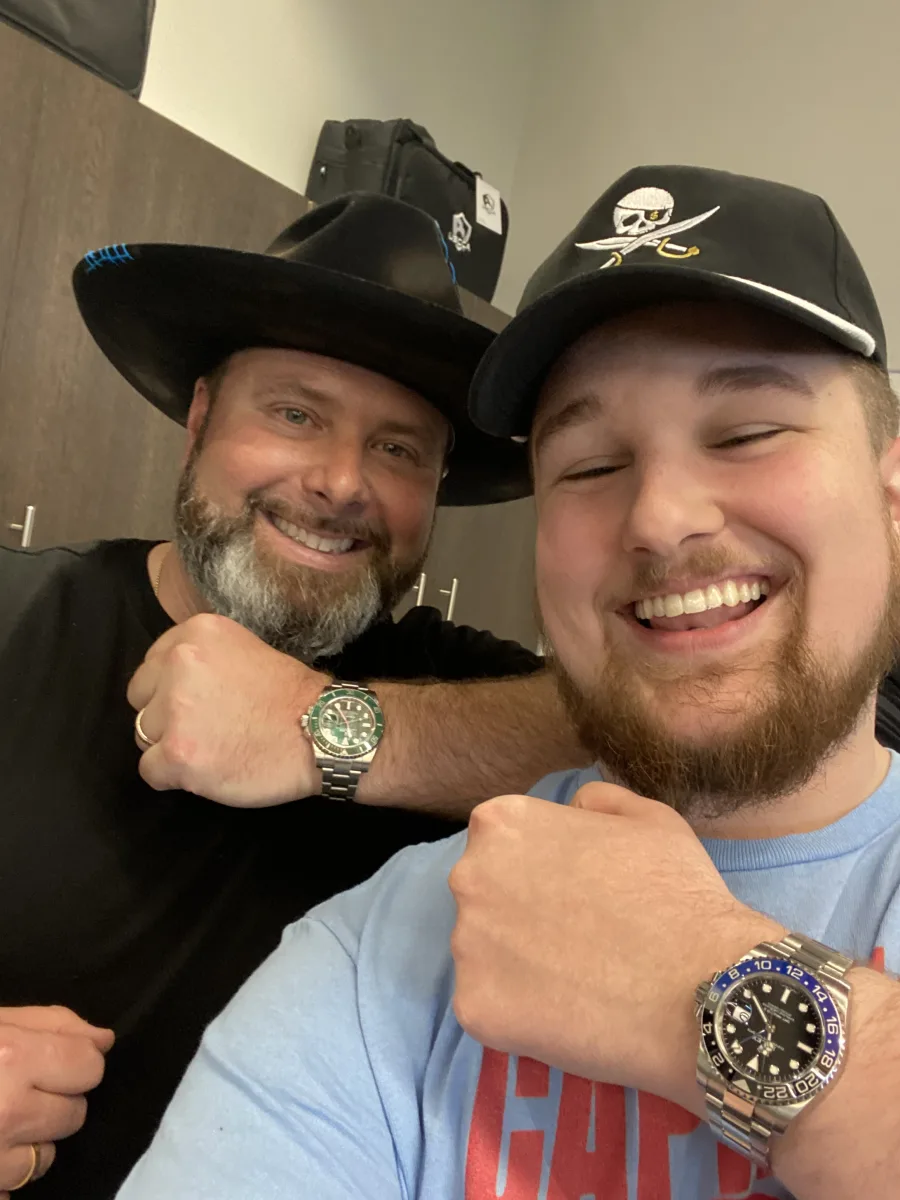
The person who showed him another way to live was PJ, a family friend who ran an e-commerce business out of a warehouse in Kansas. At 16 and 17, John spent his summers living with PJ and working in that warehouse for $10 an hour, up to 80 hours a week by his count.
PJ was the first entrepreneur John had ever known. Nobody else in his family ran a business. PJ was up at 6 and home at midnight, and he told John something that stuck:
“The harder you work, the luckier you end up being.”PJ, as John remembers it
The No Excuses Show: getting in the room
At 18, with some savings from those jobs and the reselling, he set himself one goal: get around successful people. The plan came from a podcast. John had been listening to Casey Adams, a young entrepreneur who built a career by interviewing other entrepreneurs, and he saw the trick in it. “I don’t really have any reason for successful people to want to be around me,” he says. “So I’m going to start a podcast so I can interview these successful people.”
The show was The No Excuses Show. Its first episode went out on August 27, 2018, and it ran 42 episodes through November 2019. John says he also interviewed Dan Martell, Steli Efti and Iman Gadzhi, who became a friend through the interview. The bios of the time describe it as a top 100 business podcast. John and Casey Adams are friends now too.
The No Excuses Show
- Frank Kern | The Father of AdvertisingApr 30, 2019
- Grant Cardone | 10X Your LifeMay 6, 2019
- Jeremy Haynes | Digital Marketing Expert, 1900+ StudentsJun 6, 2019
- Judge Graham - Selling Agencies for 8 and 9 FiguresJul 22, 2019
He became a guest himself. Over 2018 and 2019 he appeared on a string of other shows, among them Real Talk University, which introduced him in December 2019 as “a serial entrepreneur based out of Nashville, Tennessee,” and he wrote 28 profiles of other entrepreneurs for Disrupt Magazine between June 2019 and September 2020.
The podcast made no money. It did something more useful: it taught him how agencies worked, because so many of the people he interviewed ran one, and it gave him a name in the space before he had a business. “Nobody knows me as a marketer yet,” he says of that period. “Everybody knows me as a podcast guy.”
99 Media: the first agency (2018)
He decided to start a marketing agency at a bowling alley in Tennessee on New Year’s Eve. The agency was called 99 Media, and he founded it with Adam Artemis, a friend who was doing the same eBay reselling John was. The two of them lived under one roof while they built it.
The first year was, in John’s words, “mistake after mistake after mistake.” 99 Media was a generalist shop. It did social media management for a few local businesses at $1,000 to $3,000 a month, and most of its $10,000 to $15,000 a month came from press packages sold to people John met through the podcast, which dried up once he had sold to everyone he knew. At one point he and Artemis went so deep on one client, a health and wellness spa, that they ended up working there full time and lost other clients. He still teaches that lesson: go all in on one client and you become that client’s employee.
Looking back, John thinks the podcast was doing the selling. Almost every 99 Media client came through a referral, a warm connection or the show itself, so by the time a prospect got on a call they already knew he was a real person. He found that out when he picked a niche and hired a virtual assistant to send cold outreach to real estate agents. Response rates collapsed, prospects didn’t show up to calls, and the ones who did asked for references, more case studies and free trials. To a cold prospect he was just another agency in their messages.
“The trust was actually doing all the heavy lifting.”John Danes, in his Leadjolt case study video
The turn started with a program called Traffic and Funnels, which they joined for $9,800 they couldn’t really afford. The one idea they took from it was prospecting in Facebook groups. They joined real estate groups, messaged agents, and sold one realtor a $3,800 coaching package on how to run his own Facebook ads. He closed about five deals from it.
Leadjolt: $0 to $2 million a year in 10 months
In January 2020, before COVID, John and Artemis were invited to a party around the ClickFunnels event in Nashville. Two marketing agency owners there, both students of Iman Gadzhi, asked if they were using GoHighLevel. They had never heard of it.
That conversation produced the offer. Instead of teaching realtors to run ads, they would run the ads for them, generate the leads and do all the follow-up through GoHighLevel. It worked at once. “In February we’re doing 30k a month,” John says. Every client was on a month-to-month agreement, and within about a month they had lost all of them. They went back to outbound, signed clients again, and scaled back up to around $40,000 a month.
Three names in a year
The agency was renamed Realtor Domination, and then the National Association of Realtors sent a cease-and-desist letter: “Realtor” is the association’s trademark. They switched to Commission Accelerator, a name with a hyphen in its .com.
That is where Judge Graham came in. John describes Graham as an agency founder who sold one agency for eight figures and another for nine; Graham had been a guest on The No Excuses Show in July 2019, in an episode titled “Selling Agencies for 8 and 9 Figures.” He mentored the two of them “really for fun,” John says. Graham was big on positioning and naming, and he told them the name had to go. He liked words like Jolt and Torque and suggested Jolt Leads. John thought it sounded too close to their biggest competitor, BoldLeads, and flipped it: Lead Jolt. He bought leadjolt.com for $1,300 on the spot, which he calls probably the best return he has ever had on anything. The agency became Leadjolt in June 2020.
- 99 Media
- Realtor Domination
- commission-accelerator.com
- Leadjoltleadjolt.com · $1,300
Looking like the market leader
The name was one part of a bigger piece of advice. John remembers Graham telling him: “You need to rebrand and you need to establish yourself as the number one name in your space.”
“You need to look the part.”Judge Graham, as John remembers it
John calls the idea market leader positioning, and he breaks it into four parts: the niche, the name, the brand and the funnel.
Leadjolt’s niche was real estate agents and nothing else. The brand got a full playbook, and over the years John put about $30,000 into the brand, the website and the visual identity. The funnel was built so that a cold prospect who looked the company up found a professionally shot video on the homepage, an about video of John and Artemis telling their story, case studies with each client’s full name and result, and videos explaining each part of the offer. The social profiles carried a pinned demo of the system running: leads arriving in the CRM, the follow-up going out, appointments being booked.
John says the positioning did more than any script. It got Leadjolt press coverage, including in the real estate publication Inman, and it let a new agency compete for real estate agents’ budgets against Zillow. “You don’t actually have to be the market leader,” he says, and elsewhere in the same video: “It’s a whole different story to appear as the market leader.”
The offer, in three versions
Leadjolt’s offer went through three versions, and John uses them to teach what he calls the hybrid offer, one that makes the client money and saves them time.
Version 1
$997/mo
100 leads in 90 days
Adds leads
Version 2
$1,497/mo
The leads, plus 15 appointments in 90 days
Adds leads, takes away follow-up
Version 3
$2,497/mo, from
30 appointments in 16 weeks, booked by a live sales assistant
The hybrid offer: makes them money, saves them time
- The first was 100 leads guaranteed in 90 days for $997 a month. It delivered, and clients were still unhappy: a busy agent with hundreds of new leads in their inbox and no time to call them has more stress, not less.
- The second added 15 appointments in 90 days on top of the leads, with text and email follow-up, for $1,497 a month.
- The third, the one that made the most money and kept clients longest, guaranteed 30 appointments in 16 weeks from $2,497 a month. It added a live sales assistant, a person who called every lead 8 to 12 times, qualified them and booked appointments straight onto the agent’s calendar.
He could say the final version in one sentence: “We help real estate agents generate leads, follow up, and put booked appointments on their calendar.” Leadjolt also took only one agent per area, which is why the confirmation video on its booking page asked new prospects to lock in their spot.
Outbound first, then ads
Leadjolt grew on outbound first. Its first 107 clients all came from cold email and social outreach, and John credits them with putting the agency on its way to $2 million a year in 10 months. He tells that part himself in his post on this blog, You’re Always Your Worst Client. Once the offer was proven on cold prospects, he turned on Facebook ads, and he hired Iman Gadzhi’s agency to audit them. He remembers Gadzhi telling him they were the best numbers he had ever seen.
The growth that followed is the number John is best known for. A screenshot from his Instagram at the time reads: “Launched the leadjolt.com site 10 months ago - just crossed $2m ARR.” That is a run rate, not a year of cash collected.

By his account, January 2021, the month he moved into his first apartment in Nashville, brought in $110,000, and in its biggest months Leadjolt signed more than 40 new clients. In total, John says, Leadjolt closed 771 clients and collected over $5 million in cash.
How Leadjolt sold and delivered
The outbound side ran on setters messaging agents on Instagram, Facebook and LinkedIn from Leadjolt accounts, opening with a low-pressure question. Ads came second, switched on only once outbound was working and the offer was proven.
Every booked call then went through what John calls the pre-call process. The thank-you page opened with a video from him about area exclusivity, followed by an 18-minute video explaining the system and short videos answering the common objections on price, timing and how it works. Emails and texts repeated the message before the call, and a setter checked that the prospect had watched before a closer took the call. If they hadn’t, the call was moved. On the call itself, every rep used the same 30-slide demo deck in the same order. John says he personally closed over 40% of his calls with it and his team about 25%.
- A prospect books a call
- A video from John on area exclusivity
- An 18-minute video on the system
- Objection videos, emails and texts
- A setter checks they watched
- The same 30-slide deck, every call
He never touched delivery. “I never launched a Facebook ad for a client,” he says. “I never had a check-in call. I never logged into a client’s ad account.” Every new client went through the same steps, starting with an onboarding call run from its own slide deck, which Leadjolt called the traction call, and every role had written procedures with recorded walkthroughs, so a new hire could watch, shadow for a few days and start.
Why he moved on
The model that grew Leadjolt also wore it down. Done-for-you fulfillment needed a large team, and month-to-month clients meant every month had to bring in more new clients just to hold revenue flat. He calls it the revolving door agency, and in another video he sums up that ceiling in two sentences:
“It wasn’t a mindset problem. It was a math problem.”
John was 22 or 23, and the next step for that model was a far bigger team. Instead he left Leadjolt to go work with Iman Gadzhi. When he saw Eddie Maloof in Dubai in 2023, Maloof told him it was a hard model to run and that he had run it longer than anyone. “That really meant a lot,” John says.
He names three mistakes from that run.
- Niche soonerNot picking a niche earlier cost him most of the 99 Media years.
- No panic namesCommission Accelerator was picked in a hurry after the cease-and-desist letter: a long name on a hyphenated domain.
- No month-to-monthThe first couple of hundred clients signed no contracts and could leave as fast as they joined. He now says even a three-month minimum protects both sides.
John Danes and Iman Gadzhi
The link between John and Iman Gadzhi, the YouTuber and founder of the agency education company Educate.io, runs through every stage of the story above.
By John’s account they met in 2019, when Gadzhi came on his podcast. “I’ve been very fortunate to know him since 2019,” John says. “We did a podcast, he helped me with some of my agency ads, he helped me with my agency in general.” When Leadjolt started running ads, John paid Gadzhi’s agency, IAG Media, around $8,000 to audit the ad account, rebuild the funnel and write the emails. John was also a student in Gadzhi’s agency program, and on February 2, 2020, Gadzhi’s YouTube channel published his case study: “How John Danes Used Agency Incubator To Scale To $18,000 Per Month With His SMMA.” The video’s description calls it the story of how John “broke the mould by finding success with a business partner.”

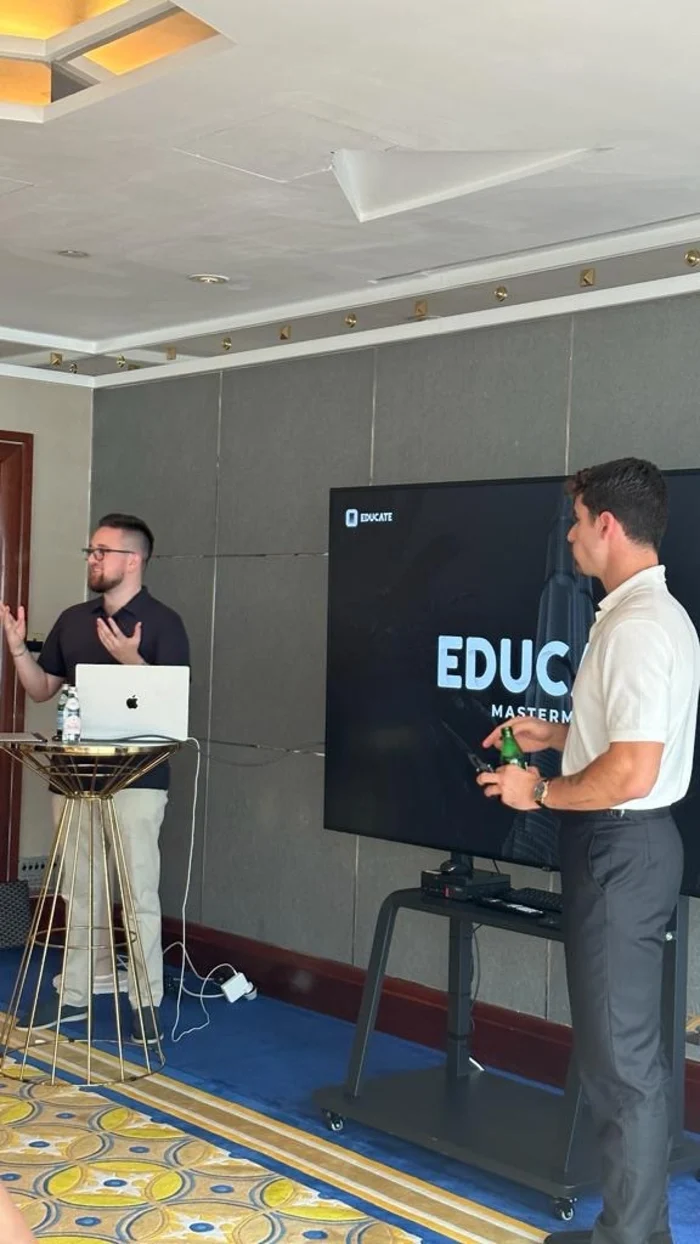
After Leadjolt, John went to work with Gadzhi at Educate.io. He started as head coach, coaching agency owners inside Gadzhi’s programs, was promoted to VP of Product, and became Chief Product Officer. AgencyClients.com says the programs reached more than 30,000 students.
- Head coach
- VP of Product
- Chief Product Officer


What he took from Gadzhi
John has a whole video on the one lesson he says Gadzhi taught him. When he paid IAG Media, Gadzhi sold him on one call and then John never spoke to him again: Gadzhi’s media buyers and copywriter did the work, and did it well. The owner’s job, John concluded, is client acquisition and brand, and the team’s job is fulfillment. He credits that split with seven figures a year for multiple years. Of Leadjolt after that, he says:
“Every client that we signed up never saw me again.”
“I will get them in the door. I will get them to pay that first invoice,” he says. The team did the rest.
He is just as clear about why he left. “I don’t want to work for anyone,” he says. “Even if it’s somebody that I respect, love, and admire.” He describes Gadzhi as someone he will “never have a bad word to say about.”
AgencyClients.com (2024)
John launched AgencyClients.com in 2024, a one-on-one mentorship for agency owners. The difference he wanted was access: after spending, by his estimate, over $1 million on coaching, masterminds and ads across his career, he says the only coaching that ever paid off was one-on-one. So AgencyClients was built around time with him, not a course library.
Its curriculum is the system he ran at Leadjolt, which he calls the pre-sold client engine. Market leader positioning is the foundation, and five parts sit on it in order: the hybrid offer, the demand engine (outbound, then ads), the scalable selling system (the pre-call process and the demo deck), assembly line fulfillment, and founder removal. “Every piece in the pre-sold client engine builds on top of the one before it,” he says. The mistake he sees most often is agency owners starting at outreach or ads without the foundation, then blaming their scripts. He has coached dozens of agency owners through it. He took a break in 2025 and came back to it in 2026, which he calls version two.
The pre-sold client engine
- Founder removal
- Assembly line fulfillment
- Scalable selling system
- Demand engine
- Hybrid offer
- Market leader positioning
His explanation for caring this much is short. “This model changed my life,” he says of the agency business. “It wasn’t coaching. It wasn’t e-com. It wasn’t Amazon FBA. It wasn’t being a remote closer. It was starting an agency.”
RoofSpark (2026)
On August 13, 2026, RoofSpark, a client acquisition company for residential roofing contractors, announced a new brand and leadership structure “with John Danes joining as Chief Executive Officer.” Its founders are Adam Artemis, his partner from 99 Media and Leadjolt, who is COO, and Mohamad Ghattas. Roofing Contractor covered the change the next day.
“My job is to build the structure around what Adam and Mohamad already do well. The rebrand is the outward part of that. The internal part is documenting the system so it runs the same way on every account, in every market.”
AgencyLeads (2026)
AgencyLeads is the company I work at, so this part is first-hand.
John started AgencyLeads in 2026 to fix the problem he lived through at Leadjolt and kept seeing in the agencies he coached: good agencies spend their time on client results and stop feeding their own pipeline. He wrote about it in his first post on this blog, which is titled after the idea: you’re always your worst client. AgencyLeads builds and runs a done-for-you outbound division for established agencies, with cold email, social outreach and a dedicated appointment setter, so qualified appointments land on the agency owner’s calendar. It works with agencies doing more than $1 million a year, and it is backed by three written guarantees.
The outbound-first idea is his. It is the same order he used at Leadjolt: prove the offer on cold prospects, then scale. I build the software it runs on.

What John Danes teaches
The same few ideas run through his videos, his coaching and his companies.
Trust closes deals.
“The biggest lesson here is that trust is the entire game,” he says in his Leadjolt case study video. It is the reason he names positioning first.
Market leader positioning.
“It’s really how your agency appears in the eyes of your target clients.” Judge Graham’s renaming of Leadjolt is his example.
Validate with outbound before ads.
Cold prospects are the hardest to sell, so an offer that sells to them will make paid ads work much better.
The owner sells, the team delivers.
The lesson he credits to Gadzhi.
Growth is arithmetic.
An agency that has to replace churned clients every month is a revolving door, and no amount of mindset fixes it.
“Entrepreneurship is jumping out of a plane and building a parachute on the way down.”John Danes, on his YouTube channel
Frequently asked questions
Who is John Danes?
John Danes is an American entrepreneur from the Nashville, Tennessee area. He is the founder and CEO of AgencyLeads, a done-for-you outbound agency for established marketing agencies, and the founder of AgencyClients.com. He previously built the real estate lead generation agency Leadjolt and was Chief Product Officer at Iman Gadzhi’s Educate.io.
What companies has John Danes started?
99 Media, his first agency, which became Leadjolt in 2020; AgencyClients.com in 2024; and AgencyLeads in 2026. He has also been CEO of RoofSpark since August 2026.
Did John Danes work with Iman Gadzhi?
Yes. John says they met in 2019, when Gadzhi came on his podcast. John hired Gadzhi’s agency to audit Leadjolt’s ads, appeared in a case study on Gadzhi’s YouTube channel, and later joined Educate.io, where he rose from head coach to VP of Product to Chief Product Officer.
What is Leadjolt?
Leadjolt is the lead generation agency for real estate agents that John founded with Adam Artemis. It started as 99 Media, took the name Leadjolt in June 2020, and reached a $2 million a year run rate within 10 months of launch.
What is AgencyLeads?
AgencyLeads is a done-for-you outbound agency founded by John Danes. It installs and runs cold email, social outreach and a dedicated appointment setter for marketing, SEO and AI agencies doing more than $1 million a year. It is based in Fernandina Beach, Florida.
How old is John Danes?
John said he was 26 in a video published in January 2026.
Where is John Danes from?
He grew up in the Nashville, Tennessee area and now lives in North Florida.
Is John Danes on YouTube?
Yes, at youtube.com/@johnmdanes, where he posts about building and scaling agencies. His 52-minute story video, “From $0 to $5M Agency Owner (my 7 year story),” is the main source for this profile.
Sources
- John Danes, “From $0 to $5M Agency Owner (my 7 year story),” YouTube, January 30, 2026.
- Iman Gadzhi, “How John Danes Used Agency Incubator To Scale To $18,000 Per Month With His SMMA,” YouTube, February 2, 2020.
- Real Talk University, “John Danes: The Keys To Being a Successful Entrepreneur At a Young Age,” episode 15, December 19, 2019.
- John Danes, author page, Disrupt Magazine, 2019 to 2020.
- “RoofSpark Launches New Brand and Leadership Structure for Residential Roofing Client Acquisition,” PR Newswire, August 13, 2026.
- Roofing Contractor Staff, “RoofSpark rebrands, names new CEO,” Roofing Contractor, August 14, 2026.
- John Danes, “You’re Always Your Worst Client,” AgencyLeads blog, October 17, 2026.
Written by the person who builds AgencyLeads with him,
Samuel Prusa
CTO @ AgencyLeads